We're HEHE.studio, a small design studio in Poland, and we logged our hours in a paid Clockify workspace. In October 2026 we moved our whole Clockify history to a tracker we built ourselves (it's called Oretta now), and we've used it every working day since.
Clockify did its job
Anyone on the team could start and stop a timer with zero training. Its rate rules made so much sense that we copied them as they are: person on project first, then project, client, person, company. Same with logging to the second, without rounding.
So why move at all? The seat price. Our team changes project by project, with freelancers joining for a project and leaving when it ships, and paying per seat got expensive as people came and went. Per-seat pricing is fair for a team that stays the same size. Ours doesn't.
What we tried first
We didn't start by writing our own. The first version, in early October, was Kimai (open source, self-hosted), plus a script to pull our history out of Clockify and a small server so we could keep logging hours by talking to Claude. We already did that through a Clockify MCP server and weren't going to give it up.
A week later we threw the Kimai setup away and rebuilt everything from scratch. Kimai worked fine, but the interface felt dated, and I couldn't see the team enjoying it every day.
Building it ourselves
I built it myself, with a lot of help from Claude Code. The rule for day one: work like Clockify, so nobody on the team has to relearn anything. Same rates, same project colors, private projects stay private, entries to the second.
Moving the history, then checking it month by month
This was the part I cared about most, because old invoices have to keep adding up.
The migration reads from Clockify's API and changes nothing in Clockify. It runs in three steps:
- plan shows what it will create (people with their roles and rates, clients, projects) and writes nothing
- apply moves people, rates, clients, projects, tasks, tags and every entry. Each old entry keeps the rate it had in Clockify, so old amounts stay put. Run it again and it only adds what's new
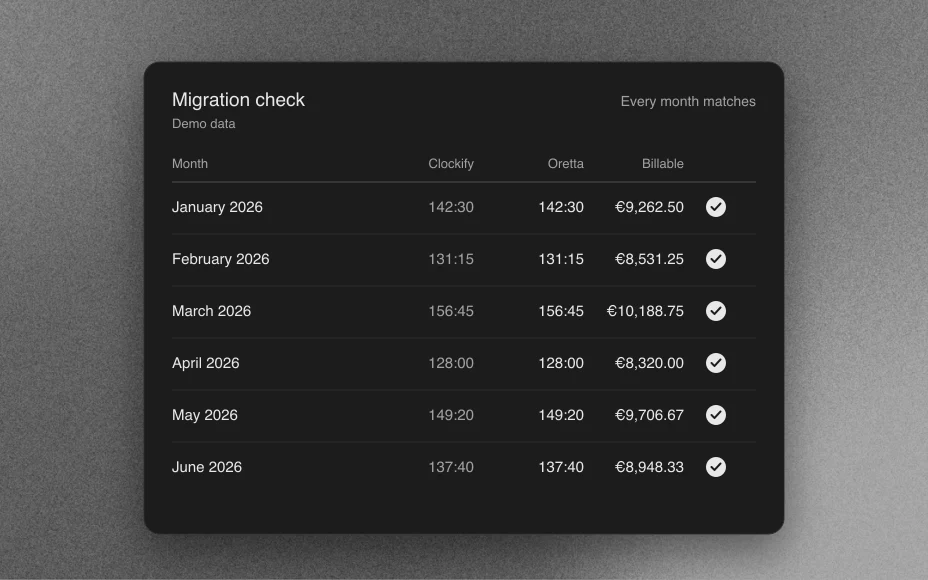
- verify compares the number of entries, hours and billable amounts for every person and every month
On the day we picked a switch date, ran apply, asked the team to log only in the new app, ran apply once more the next day for the late entries, then verify. Every month matched on the first run, apart from a few cents (grosze, in our case) we expected: Clockify rounds each entry's amount and Oretta doesn't. People who left keep their history in the reports; their accounts are just switched off.
Since then we've run the same migration on a workspace already downgraded to Clockify Free, and the full history came across there too.
What changed day to day
The 09:00 Slack summary is now part of the morning. People log and check hours by talking to Claude (same tools as our old Clockify setup), and the budget warnings have become part of the routine too.
And when a freelancer joins a project, they log time in the same studio and the bill stays the same, because Oretta is priced by active clients per month, never per seat.
Who it isn't for
Oretta is for small studios that bill by the hour or against a budget. If that's not you, something else fits better:
- Five people or fewer and no billable rates? Clockify Free still does that well.
- A bigger team that needs it free: TimeCamp, TrackingTime or Jibble.
- Invoices straight from the tracker: Harvest. Oretta doesn't invoice.
- A team logging time on phones in the field: pick a tool with a native mobile app. We don't have one.
- Hours handed in once a month: a timesheet is enough.
Try it
Oretta is free for one person, and a second person starts a 30-day trial. Start free.
Sources
- Clockify, "Updates to Clockify Free plan": five active users on Free; billable rates, billable tracking and CSV export on paid plans. https://clockify.me/help/administration/updates-to-clockify-free-plan (accessed 2026-11-02)